
In the early 1800s, before the invention of baking powder and baking soda, ammonium bicarbonate was the primary source of dough. So if your family has a recipe for cooking with this ingredient, this is an old recipe.
According to some, ammonium bicarbonate was originally made from deer antler horns. We can not imagine who did how and why such an experiment and discovered this substance, and of course what a brave spirit!
Ammonium bicarbonate can be used as a food fermentation agent. Its combination with sodium bicarbonate can be used as dough ingredients such as bread, biscuits and pancakes. It can also be used as a raw material for foam powder water as well as for bleaching green vegetables.
Ammonium bicarbonate is used in the preparation of sweets and crackers. But keep in mind that the end product should be something that basically dries when cooked. Otherwise, some unpleasant odor will remain.
Ammonia cookies are still used in some traditional Scandinavian, Northern European, and Middle Eastern recipes today.
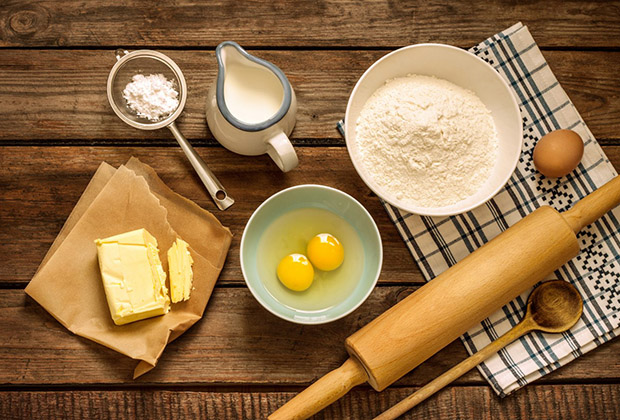
The tiny crystals decompose and turn into gas at oven temperature. When the gases escape, they leave small air cavities behind that provide light, crispy cooked products.
Ammonium bicarbonate is a paste enhancer, a kneading agent, a pH controlling agent and a tissue donor. It is prepared from the reaction of gaseous carbon dioxide with aqueous ammonia.
Ammonium bicarbonate crystals precipitate from solution and are subsequently washed and dried. Ammonium bicarbonate, also known as hearthorn and rock ammonia, is soluble in water but decomposes on heating.
Baker ammonia, also known as ammonium bicarbonate (and often sold as ammonium carbonate), was the primary baker’s kneading agent before the advent of baking soda and baking powder in the 19th century. In fact, special recipes for European and Middle Eastern cookies and crackers are still needed.
When you buy powder, you quickly discover its biggest flaw: a very strong odor. (Now it’s clear why bakery ammonia was passed under the noses of Victorian women in ancient times to revive them when they were anesthetized or fainted.)
Because of this aroma, ammonium bicarbonate is only used to knead low-moisture baked goods such as crispy biscuits and crackers, although they dry thoroughly during baking to leave no ammonia.
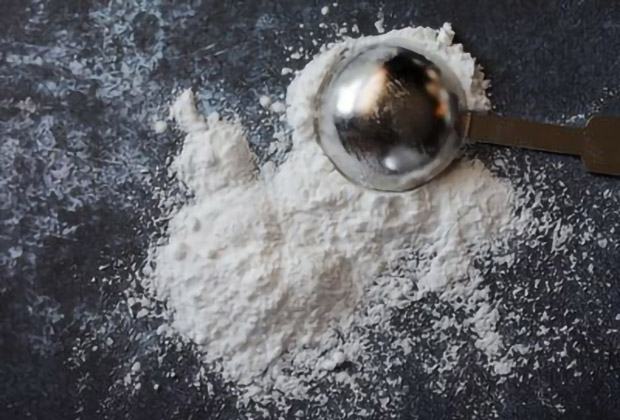
When we replace bakery ammonia (ammonium bicarbonate) with baking powder in crunchy sugar cookies, we find that not only can the two products be used together, but bakery ammonia can produce crispier and lighter crumbs.
This is because when the tiny crystals decompose in the heat of the oven, small air cells are left behind that moisture can easily escape. In addition, the dough leaves no residual soapy taste in baking powder or baking soda.
The use of ammonium bicarbonate in bakery works so well that if it were more easily available, we would be tempted to always use it for baked goods.
As we have said, ammonium bicarbonate is a very useful kneading agent for biscuits, because it decomposes completely when heated and decomposes into carbon dioxide, ammonia gas and water. and as a result, no trace remains on the baked biscuits.
Another name for ammonium bicarbonate Vol (Volatile Salt), also commonly known by this name, is named precisely because of this separation from “volatile salt”. Ammonium bicarbonate is easily soluble, but it is very alkaline and offers softer pastes that require less water for a certain consistency.
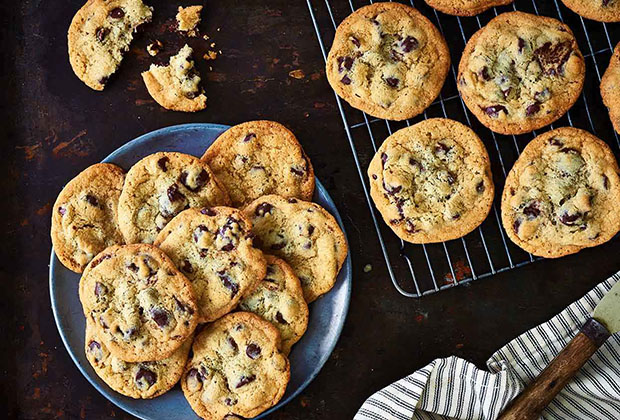
Despite the strong odor of ammonia, both solid and in solution, only a small fraction of the gas is Decomposed when dissolved in water and stored at room temperature. Even in solution for 24 hours, a small amount of its strength is lost.
It is important to remove all the ammonia during cooking, otherwise it will have an unpleasant taste. Therefore, ammonium bicarbonate is not suitable as a kneading agent in products that use ovens with a humidity of more than 5%, such as cakes and sponges.
In many cases, removing all the acidic substances in biscuit doughs and using only ammonium bicarbonate and baking soda is satisfactory and convenient. Baking soda is primarily used as a means of controlling the acidity of baked biscuits.
Ammonium bicarbonate is sold as a white crystalline solid in paper or plastic bags. It is prone to severe bumps, even when stored in dry conditions.
Therefore, it should be used as soon as possible after purchase. It may be best to dissolve this food additive and chemical in water before adding to the mixture.
To buy ammonium bicarbonate or to know the price of ammonium bicarbonate, contact the experts of the collection through our contact us page.
Related Articles:
