
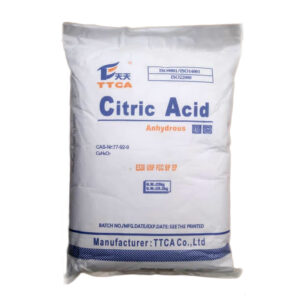
 Citric Acid (Anhydrous)
Product Analysis
Citric acid or in the colloquial term lemon essence is an excellent acid from the group of hydroxy acids that has many functions in the food industry, cosmetics, pharmaceuticals and agriculture.
Citric acid (discovered by Jaber Ibn Hayyan, scientist and founder of chemistry), is found in significant amounts in acidic citrus fruits such as lemons and oranges. anhydrous citric acid or (granule) is a white powder with a very strong acidic taste that can be dissolved in water. The main difference between anhydrous and monohydrate citric acid can be found in its processing and production stage.
monohydrate citric acid is formed from the crystallization of cold water and anhydrous citric acid is formed from the crystalline from hot water.
Main functions of anhydrous citric acid
First of all, it should be noted that use of anhydrous citric acid by all food and drug regulators, including The Food and Drug Administration has declared it completely safe; therefore anhydrous citric acid is used in many food industries.
Food industry
Candies, pastilles, soft drinks and carbonated beverages, fruit-flavored sweets and many other things are made from anhydrous citric acid. Because lemon juice is prepared in powder form, it can also be used to flavor dry and juicy food, because anhydrous citric acid acts as a flavoring like salt.
When making cheeses, including mozzarella cheese, anhydrous citric acid is used to achieve a suitable acidic environment and adjust PH. In production of ice cream, anhydrous citric acid is used in the production process to have an elastic and dense texture. And it can be completely ensured that it does not taste bad in the process of ice cream production.
Cosmetic
Citric acid because of its pH adjustability is wildly used in skin care products and topical lotions. It should be noted that anhydrous citric acid because of high levels of antioxidants ,is widely used in anti-aging products.
This substance (anhydrous citric acid) shaves the skin and acts exactly like a peeler, destroying dead skin cells and causing the growth of new cells and formation of collagen on the skin. Fortunately, because anhydrous citric acid is a completely natural substance, there have been no reports of allergies to this product on the skin. In shampoos and soaps, use of anhydrous citric acid causes the early dissolution of impurities from the surface of skin and hair.
Anhydrous citric acid in agriculture
Because citric acid helps to release the elements of potassium, zinc, copper, iron, etc., it increases plants grow and improve their growth process. Therefore, in the process of planting to harvest agricultural products chemical fertilizers containing anhydrous citric acid are commonly used to reduce the destructive effects of pests and insects on crops and grow plants better and better.
The price of anhydrous citric acid is one of the main reasons for the choice of this product by farmers because with choosing this harmless fertilizer can ultimately yield a significant profit from the final product. Natural and industrial products of anhydrous citric acid
As mentioned earlier, standard amounts of citric acid are found naturally in a variety of fruits such as, oranges and lemons (and sour lemons), tomatoes, berries, which can say about 9% of fruit volume in the dried state, belong to the citric acid in them.
In industrial cases, about 99% of production is obtained artificially and only one percent of them, made from natural sources, like fruits and citrus. Artificial methods in the production of citric acid are divided into two types: the first is through Aspergillus Niger fungi, which is called the fermentation method, and the second method, which is not economical, is through a glycerol-based chemical reaction.
How to prepare industrial citric acid (based on natural ingredients)
In the fermentation method, production of citric acid is done by using corn stalks by underwater fermentation method and Aspergillus isolated from the soil. Corn stalk powder which contains large amount of sucrose (natural sugar) has currently shown the best performance in the preparation of citric acid. Actually corn stalks is a very cheap and suitable natural source for preparing citric acid.
Another sugar used in the production of citric acid is the sugar in pineapple fruit waste, which has very high amounts of natural sugar.
