
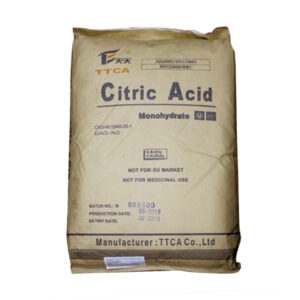
 Citric Acid (Monohydrate)
Product Analysis
Citric acid or in the colloquial term lemon essence is an excellent acid from the group of hydroxy acids that we use this product in food, cosmetic, pharmaceutical and agricultural industries.
Citric acid (discovered by Jaber Ibn Hayyan, scientist and founder of chemistry),is significantly found in acidic citrus fruits such as lemons and oranges.
Aqueous citric acid or monohydrate is a non-toxic acid and has very little reactivity. This type of citric acid is completely degradable and can be disposed with wastewater completely. This citric acid is used in production of candies, beverages and carbonated beverages, jams, compotes and medicinal purposes.
Use of hydrated citric acid in food industry
Increases the useful life of products
Due to the preservative properties of aqueous citric acid, this product has many functions in food industry and it can increase the shelf life of food products.
As you know, bacteria grow and multiply in stable pH environments. We can reduce the pH of the environment and prevent the growth of bacteria in food by adding acid citric. So we will have some products with a much longer shelf life than usual.
Flavoring properties
Usually a pleasant sour taste is found in beverages (especially carbonated beverages), due to amounts of citric acid. As we said at the beginning of this article , citric acid is actually a natural acid in orange and lemon, which is industrially obtained from the fungus Aspergillus Niger, so we should expect food products to which citric acid has been added to them, will have a sour lemon flavor.
Carbonating drinks
Significant amount of citric acid are used in the carbonated beverage industry, including soft drinks, carbonated water (sometimes flavored) and natural carbonated beverages. The combination of citric acid with sodium bicarbonate is a good mixture for carbonating drinks.
It can be said that about 60% of hydrated citric acid products are used in the production of carbonated beverages. It is important to know that citric acid is also used stomach acid pills such as proton pumps.
Increases the absorption speed
First of all ,it is necessary to know that many vitamins and minerals have better effect in acidic environments. So in the preparation of such tonics and vitamins, hydrated citric acid usually used to absorb these vitamins and minerals.
The interesting point in this section is that in the preparation of vitamin C effervescent tablets, which is a very essential liver vitamin for the body, large amount of citric acid are used, if we eliminate the use of this substance (hydrated citric acid) in the process of preparing effervescent tablets will be completely bitter, because vitamin C has a very bitter taste.
Aqueous citric acid, a suitable catalyst
In many industries that need to accelerate the reaction of substances with each other, citric acid is the main reaction substance .For example, in the food industry of the cheese products , hydrated citric acid is used as a main catalyst for milk fermentation. This causes a cheese factory (especially Mozzarella cheeses) can produce many times more in a short time.
Emulsion
An emulsifier is a process in which insoluble liquids such as oil with liquids such as water. This event is used in many such processes due to the presence of citric acid as an emulsifier of vegetable fats. In fact, in the preparation of ice cream, citric acid is used to achieve a homogeneous texture. in many uses of citric acid is referred to as chocolate because, by process of emulsion ,it creates a soft texture ,like thick melted chocolate.
Natural and industrial products of hydrated citric acid
As mentioned earlier, standard amounts of citric acid are found naturally in a variety of fruits such as, oranges and lemons (and sour lemons), tomatoes, berries, which can say about 9% of fruit volume in the dried state, belong to the citric acid in them.
In industrial cases, about 99% of production is obtained artificially and only one percent of them, made from natural sources, like fruits and citrus. Artificial methods in the production of citric acid are divided into two types: the first is through Aspergillus Niger fungi, which is called the fermentation method, and the second method, which is not economical, is through a glycerol-based chemical reaction.
How to prepare industrial aqueous citric acid (based on natural ingredients)
In the fermentation method, production of citric acid is done by using corn stalks by underwater fermentation method and Aspergillus isolated from the soil. Corn stalk powder which contains large amount of sucrose (natural sugar) has currently shown the best performance in the preparation of citric acid. Actually corn stalks is a very cheap and suitable natural source for preparing citric acid.
Another sugar used in the production of citric acid is the sugar in pineapple fruit waste, which has very high amounts of natural sugar.
