
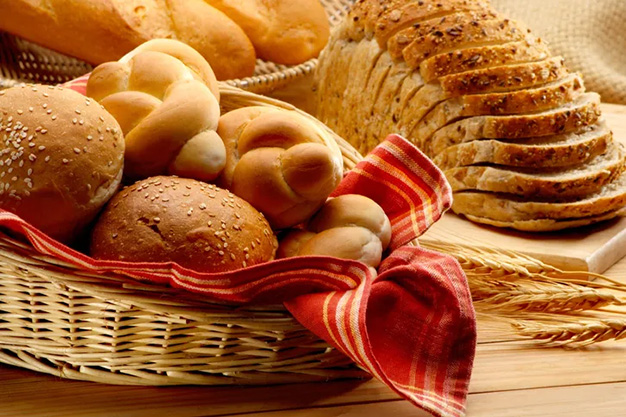
Many cakes, such as chocolate cake, contain distilled monoglyceride, which helps create an even texture. As disaccharides are related to carbohydrates, mono and diglycerides are related to fats. Here we will tell you about the function of distilled monoglyceride
Fats are composed of one molecule of glycerol and three fatty acids. A fatty acid linked to a glycerol molecule is called a monoglyceride, and as the name suggests, two fatty acids linked to a glycerol molecule is called a disaccharide.
distilled monoglycerides are used in a variety of foods, mainly as emulsifiers.
They are also used to improve :
- Softness of the dough
- Cake volume and texture
- The creamy sensation of ice cream in the mouth
- The softness of the cheese
Some oils naturally contain mono and diglycerides, but in low concentrations, they require industrial production.
When they are produced, they are produced through glycerolysis (using glycerol) of fats and oils such as soybean, canola, cottonseed, sunflower, and coconut or palm oil.
Among these fats and oils, the main fatty acids for mono and diglyceride production are lauric acid, linoleic acid, myristic acid, oleic acid, palmitic acid, and stearic acid.
For production, a high-temperature alkaline catalyst is used to create a mixture of mono-, di-, and triglycerides and a small amount of glycerol. Monoglycerides can be separated from this mixture using distillation methods, then further processed to give this ingredient more functionality in a formulation.
The result of further purification of monoglycerides are :
– Distilled Monoglycerides (or DMG/Glycerol Monostearate)
– Ethoxylated monoglycerides
– Monoglyceride citric acid esters
– Lactic acid esters of monoglycerides
– Monoglyceride acetic acid ester
– Mono and diglyceride diacetyl tartaric esters (DATEM)
Functional properties of monoglycerides and distilled monoglycerides are determined by :
– Monoglyceride percentage.
– How well does this combination stabilize an emulsion of two immiscible substances (water-in-oil or oil-in-water emulsions)?
– The type of fat used as the base material.
– Whether the main fat is saturated or unsaturated.
– Crystallization of fats. These are referred to as alpha, beta (beta first), or beta crystals, with the alpha form being the most functional, but over time some tend to transform into the more stable beta forms, which are still moderately functional. .
Hydrophilic-lipophilic balance
In the monoglyceride molecule, the glycerol “head” is hydrophilic, meaning it is attracted to water, and the fatty acid chain – or “tail” – is lipophilic, meaning it is attracted to oil. The number of hydrophilic-lipophilic balance (HLB) indicates the solubility of an emulsifier and has a value scale between 0 and 20.
Keep in mind that this amount doesn’t give a complete picture of how it will perform in a formula, since most food products are made up of little more than water and oil, but it can give you an indication of potential uses.
Generally :
- Low amounts of HLB dissolve in oil and promote water-in-oil emulsions.
- Higher amounts of HLB dissolve in water and promote oil-in-water emulsions.
Key functions of distilled monoglycerides
Here are the key functions of mono- and diglycerides to consider for your formulation :
-
Aeration, aggregation and emulsification
Distilled monoglyceride are effective in stabilizing foods that show visible separation over time, even without use, such as peanut butter, coffee creamer, margarine, or mayonnaise.
Air-in-liquid emulsions, such as cake batter or ice cream, rapidly generate and stabilize air voids when a mono- or diglyceride is added to the formulation.
In cakes that use sweetening oil and contain monoglycerides, air and fat are dispersed into smaller particles in the dough, giving the baked cake more volume and finer and more uniform grains.
In ice creams, adding emulsifiers to the formula creates a more stable foam structure with a softer body and texture.
-
Starch complex and protein interaction
Mono- and diglycerides slow down the process of starch reversal that occurs during the staleness of baked goods such as bread and cakes. This tendency is due to the tendency of the starch granules to recrystallize and release water from the gelatinous matrix.
Addition of mono and diglyceride improves shelf life of cooked products and increases softness.
Mono- and diglycerides also affect the gluten protein in baked goods.
When bread dough forms, the gluten forms an elastic network to trap yeast gases and cause the dough to rise. With a poor grid, gases may escape and cause the bread to lose volume.
Using DATEM or sometimes ethoxylated monoglycerides in your formulation will help improve this network, regardless of whether it is due to annual wheat crop variability or mixing tolerance.
-
Lipid interaction and crystal modification
Because monoglycerides and diglycerides are created using fat, they can affect the fat content of a formula in several ways. Mono- and diglycerides are added to margarines to emulsify the ingredients and cause crystalline changes.
In meats and sausages, monoglyceride citric acid esters can help distribute fat better and improve emulsification.
-
Improved processing
Monoglycerides and monodiglycerides can be added to feed formula to help prevent sticking during processing. It is also effective when drying or extruding starch-based products.
Distilled Monoglyceride Price
To buy distilled monoglyceride or to know the price of distilled monoglyceride, contact the experts of the collection through our contact us page.
