
Saccharin, the oldest and first commercially available artificial sweetener, was discovered in the 1870s and patented September 15, 1885. An organic compound that was discovered by chance and made life sweeter for humans.
In this article, we are going to enter the story of saccharin discovery :
Did you know that our ancestors, who were often hunters, ate foods that were high in sweets and calories? In fact, there is a gene theory that seeks to explain our current eating habits, which are still rich in sweets and calories, by relating them to our ancestors.
Whether we like it or not, sweets are an important part of our diet, which is why both sugar and artificial sweeteners play an important role in our lives.
However, artificial sweeteners are a relatively new phenomenon. Saccharin, the oldest discovered substance, originated in the late nineteenth century and became the first commercial substance to dominate the human food scene until the second half of the twentieth century.
Remsen meets Fahlberg
The discovery of saccharin takes us back to the 1870s, when American chemist Ira Remsen returned to the United States and became a professor at Johns Hopkins University. Since the university was newly established in 1876, Remsen was the one who started the chemistry department at the university.
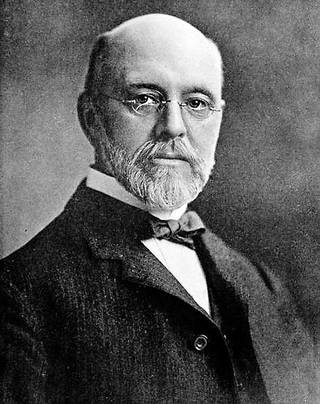
Portrait of Ira Remsen
Russian chemist Konstantin Fahlberg entered the scene in 1877 when a sugar importer hired him to analyze the purity of imported goods. The same company linked Fahlberg to Remsen and asked him to use a second laboratory for testing.
Fahlberg and Remsen got along well, and until 1878, Fahlberg worked with Remsen on the Institute’s research work.
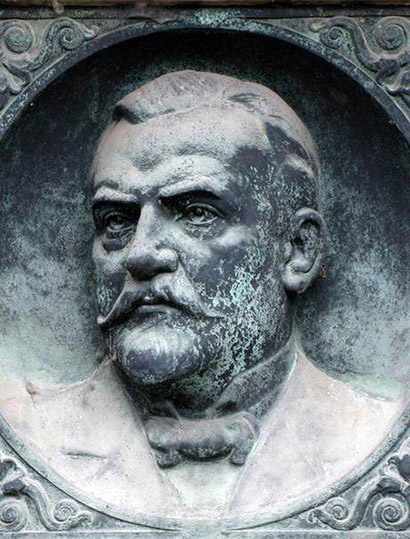
Constantin Fahlberg’s relief on bronze
Sugar without glucose
One of these days, Fahlberg was so busy with his lab work that he almost forgot about dinner. When he broke a piece of bread and bit into an incredibly sweet crust, he first thought it must be some cake. When he washed his mouth and wiped his mustache with a handkerchief, he realized that handkerchiefs were sweeter than bread!
Astonished, he picked up his glass of water. This time, as luck would have it, he placed his mouth right where his fingers had been holding the glass a few moments before, and noticed that it tasted like a sweet syrup.
Unaware that the world confectionery industry was changing, he licked his thumb and turned his suspicion of that strange confection into certainty.
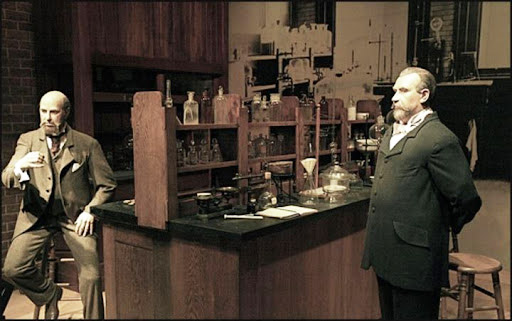
Knowing that he had accidentally come across a substance from coal tar called “sugar without sugar”, Falberg returned to the lab and tasted everything on his desk. He had found the source and worked in the laboratory for weeks and months to determine its chemical composition, properties and reactions.
Even if Fahlberg had previously accidentally synthesized saccharin in some other way, he probably never had a reason to taste it, unless he accidentally tasted it. In 1879, Fahlberg and Remsen published a joint paper describing both methods of saccharin synthesis.
Sweeter than sugar
Saccharin is an organic compound that is approximately 300 times sweeter than sugar. Although at first it seemed that none of the explorers were interested in its commercial potential, Fahlberg applied for the German-American patent after leaving the laboratory without Remsen’s knowledge.
On September 15, 1885, Fahlberg received his patent for saccharin in the United States, and he quickly set up shop selling it as a pill and powder. Saccharin, which entered the market as an artificial sweetener, soon became a viable alternative to sugar.
Sugar shortages and high prices during World War II paved the way for the substitution of saccharin for sugar, and saccharin soon became more than just a commodity.
To buy saccharin or to know the price of saccharin, contact the experts of the collection through our contact us page.
Related Articles:
